
Water is something most of us don’t think much about until the municipal bill arrives or water restrictions are announced.
Turn on the tap, flush the toilet, water the garden; it all feels routine. Yet many South African households unknowingly waste hundreds, and sometimes even thousands, of litres of water every month through small leaks, inefficient habits, and everyday activities that seem harmless.
The good news is that saving water doesn’t have to mean taking cold showers or letting your garden die. In most cases, reducing water consumption is simply about identifying where water is being wasted and making a few smarter choices.
In this guide, we’ll look at some of the biggest water wasters found in South African homes and share practical ways to reduce unnecessary water usage without sacrificing comfort.
Why Water Conservation Matters in South Africa
South Africa is one of the world’s water-scarce countries. Our rainfall is well below the global average, and growing populations, ageing infrastructure, and periods of drought continue to place increasing pressure on available water resources.
At the same time, municipal water tariffs have steadily increased in many areas, meaning wasted water doesn’t just affect the environment; it also affects your monthly budget.
While no single household can solve South Africa’s water challenges, small improvements made by thousands of families can collectively make a significant difference.
Saving water is good for your wallet, your community, and the country’s long-term water security.
Where Does the Average Household Use the Most Water?
Many people assume that watering the garden uses the most water, but in reality, household water consumption is spread across several everyday activities.
Some of the biggest areas of water use include:
- Bathrooms and showers
- Toilets
- Kitchens
- Washing machines
- Gardens and irrigation
- Swimming pools
What’s surprising is that a large percentage of wasted water isn’t caused by deliberate use at all; it comes from leaks and inefficient habits that often go unnoticed.
1. Leaking Taps
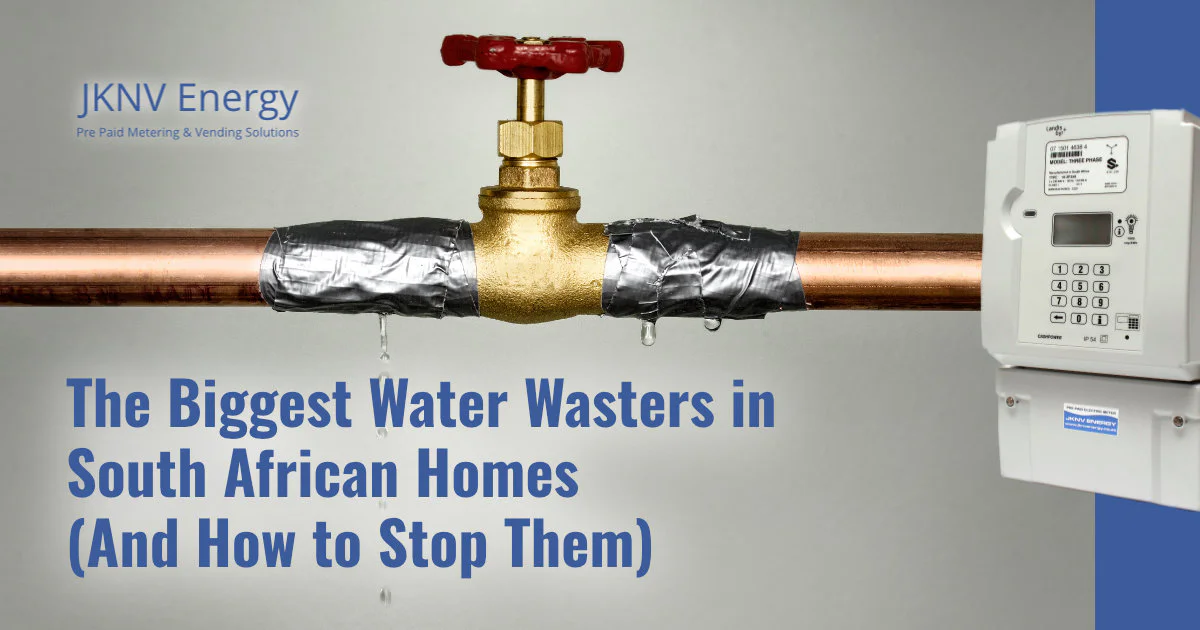
A dripping tap may seem insignificant, but even a slow, steady drip can waste a surprising amount of water over time.
Because the water is lost gradually, many homeowners ignore minor leaks for weeks or even months.
Fortunately, leaking taps are often inexpensive to repair. Replacing a worn washer, cartridge, or seal can prevent unnecessary water loss and reduce your monthly bill.
If you notice a tap dripping regularly, it’s worth fixing sooner rather than later.
2. Running Toilets
One of the biggest hidden water wasters in any home is a toilet that continues running after it’s been flushed.
Sometimes the leak is obvious. Other times it’s almost silent, making it difficult to notice until the water bill arrives.
Common causes include:
- Worn flush valves
- Faulty inlet valves
- Incorrectly adjusted float mechanisms
A simple way to check is to listen for continuous water flow after flushing or place a few drops of food colouring in the cistern. If colour appears in the bowl without flushing, you may have a leak.
3. Long Showers
For many families, showers account for a significant portion of daily water usage.
While a quick five-minute shower generally uses far less water than a long one, it’s surprising how quickly time passes when you’re enjoying hot water on a cold winter morning.
Reducing shower times by just a few minutes each day can save a considerable amount of water over the course of a year.
Installing a water-efficient showerhead can also reduce consumption without noticeably affecting comfort.
4. Overwatering the Garden
South Africans take pride in their gardens, but gardens are often watered more than necessary.
Common mistakes include:
- Watering during the hottest part of the day
- Running sprinklers for too long
- Watering even after rainfall
- Using sprinklers where drip irrigation would be more effective
Watering early in the morning or later in the evening reduces evaporation and allows more water to reach plant roots.
Choosing indigenous or water-wise plants can also help reduce long-term water consumption.
5. Washing Machines
Modern washing machines are generally much more water-efficient than older models, but habits still make a difference.
Running several half loads instead of one full load can use significantly more water.
Where possible:
- Wait until you have a full load.
- Use eco programmes if your machine offers them.
- Maintain your washing machine to ensure it operates efficiently.
These simple habits help reduce both water and electricity consumption.
6. Dishwashing Habits
Many people assume washing dishes by hand always uses less water than a dishwasher.
In reality, it depends on how you wash them.
Leaving the tap running while washing dishes can use far more water than filling the sink or using a modern, water-efficient dishwasher on a full load.
Small changes in routine can lead to noticeable savings over time.
7. Swimming Pools
Swimming pools are a wonderful feature during South Africa’s warmer months, but they can also be a significant source of water loss.
Water disappears through:
- Evaporation
- Splashing
- Backwashing filters
- Small leaks
Using a pool cover when the pool isn’t in use can dramatically reduce evaporation, helping to conserve water while also reducing maintenance.
Regular inspections can also identify leaks before they become expensive problems.
8. Washing Cars with a Hosepipe
Washing your car with a continuously running hose often uses far more water than most people realise.
Instead, consider:
- Using a bucket and sponge
- Fitting a trigger nozzle to your hose
- Visiting a commercial car wash that recycles water
These alternatives can significantly reduce water usage without compromising cleanliness.
9. Outdoor Leaks
Outdoor taps, irrigation systems, and hosepipes are often overlooked because they aren’t used as frequently as indoor plumbing.
Check regularly for:
- Dripping outdoor taps
- Cracked irrigation pipes
- Damaged hose connections
- Faulty sprinkler heads
Because these leaks often occur out of sight, they may continue wasting water for long periods before anyone notices.
10. Ignoring Your Water Meter
One of the simplest ways to identify unusual water usage is to monitor your water meter regularly.
If your consumption suddenly increases without any obvious reason, it may indicate:
- A hidden leak
- A faulty toilet
- Underground pipe damage
- An irrigation problem
Monitoring your water usage allows you to spot changes early before they result in expensive municipal bills.
For landlords, body corporates, and property managers, prepaid water meters can provide even greater visibility by allowing individual consumption to be monitored more accurately. This helps identify unusual usage patterns sooner and promotes greater accountability among residents and tenants.
Small Changes That Can Save Thousands of Litres
Saving water isn’t about making dramatic lifestyle changes. It’s about building better habits.
Here are a few simple ways to reduce household water consumption:
- Repair leaking taps and toilets promptly.
- Install water-efficient showerheads where practical.
- Water gardens early in the morning or later in the evening.
- Collect rainwater for gardens where possible.
- Only run washing machines and dishwashers with full loads.
- Check your water meter regularly for unexpected increases.
- Encourage children to develop good water-saving habits from an early age.
None of these changes is difficult, but together they can make a meaningful difference.
Which Water Savings Make the Biggest Difference?
If you’re wondering where to start, focus on the changes that typically have the greatest impact.
- Repair leaks as soon as they’re discovered.
- Fix running toilets immediately.
- Reduce shower times.
- Improve garden watering practices.
- Use washing machines and dishwashers efficiently.
- Monitor your water usage regularly.
By addressing the biggest sources of waste first, you’ll usually achieve better results than trying to change everything at once.
Water Saving Isn’t About Using Less, It’s About Wasting Less
Many people hear the words “save water” and imagine giving up comfort or convenience.
In reality, effective water conservation is usually about eliminating waste rather than reducing quality of life.
Most households can continue enjoying normal daily routines while significantly reducing unnecessary water consumption.
The goal isn’t to use as little water as possible; it’s to ensure every litre is used wisely.
Final Thoughts
Water is one of South Africa’s most valuable resources, yet much of it is lost through leaks, inefficient habits, and everyday activities that often go unnoticed.
The encouraging news is that many of the biggest water wasters are also the easiest to fix.
By paying closer attention to how your household uses water, repairing leaks promptly, and making a few practical changes to your daily routine, you can lower your water bill while helping conserve a resource that benefits everyone.
Whether you’re a homeowner, landlord, tenant, or property manager, understanding your water consumption is the first step towards smarter utility management.
If you’d like more practical advice on managing water usage, reducing utility costs, or understanding prepaid water metering, explore the JKNV Energy Blog for more helpful guides and expert insights.

